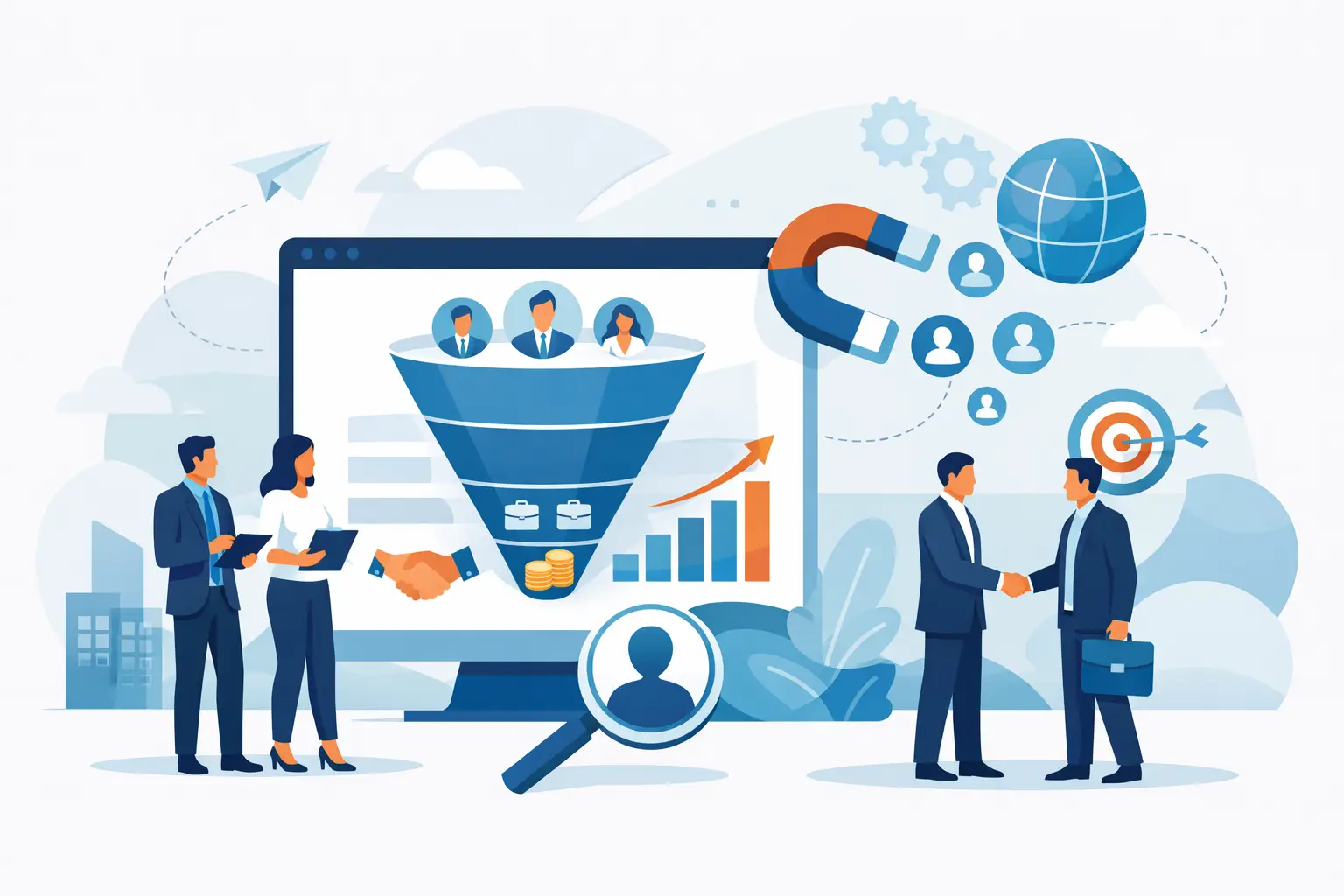
A prospect who needs help rarely starts by asking, “Which marketing channel should I trust?” They search for an answer, compare providers, look for proof, and contact the business that feels most credible. The best lead generation websites help your company show up at that exact moment with a clear message, relevant expertise, and an easy next step.
That does not mean every popular platform deserves your budget. A local home service company, a B2B technology consultant, and a professional services firm may all need leads, but their buyers research differently. The right choice depends on who you serve, how urgently they need you, the size of a typical sale, and how much trust they need before starting a conversation.
What Makes a Lead Generation Website Worth the Cost?
Traffic alone is not a meaningful outcome. A website can send thousands of visitors to your business and still produce few qualified opportunities. The platforms that deserve attention put you in front of people with real purchase intent, support your positioning, and give you a practical way to measure results.
Before committing to a listing, ad program, or content effort, consider the buyer’s stage. Search-based platforms tend to work well when people have an immediate need. Professional networks and review sites are often stronger when a buyer is researching high-consideration services. Social platforms can build familiarity and create demand, but they usually require more consistent nurturing before a prospect is ready to buy.
Cost matters, too. A free profile that takes time to manage is not truly free, and a paid lead source can become expensive when inquiries are vague or poorly matched. The goal is not to be everywhere. It is to build a focused presence where your best customers already look for solutions.
8 Best Lead Generation Websites for Business Growth
1. Your Own Website
Your website should be the center of your lead generation system, not a digital brochure. Every directory listing, social post, campaign, and referral should lead to pages that explain what you do, who you help, why your approach is different, and what a prospect should do next.
For service businesses, strong service pages, case studies, clear calls to action, and simple contact paths can do more for conversion than adding another platform. Your site is also the one asset you control. Algorithms, listing rules, and advertising prices may change, but the content, data, and customer experience on your website belong to your business.
2. Google Business Profile and Google Search
Google is often the highest-intent source for local and service-based leads. When someone searches for a provider near them or asks a specific question related to your service, they are typically much closer to making a decision than a casual social media viewer.
A complete Google Business Profile helps local companies appear in map results and reinforces credibility through accurate information, photos, reviews, and updates. For companies serving a broader region or a national B2B market, organic search pages and carefully targeted paid search campaigns can capture valuable demand. The trade-off is competition. Search visibility takes consistent work, while paid campaigns require close monitoring to avoid spending on irrelevant clicks.
3. LinkedIn
LinkedIn is one of the strongest lead generation websites for B2B companies, consultants, agencies, and professional service providers. It gives decision-makers a place to evaluate your expertise before they ever respond to outreach or book a meeting.
A company page alone is rarely enough. The better approach combines active leadership profiles, useful point-of-view content, credible client proof, and targeted relationship-building. LinkedIn advertising can also reach specific roles, industries, and company sizes, although its cost per lead is often higher than other platforms. That higher cost can be justified when your sales value is substantial and your message speaks directly to a defined buyer.
4. Clutch
Clutch can be a strong fit for agencies, developers, consultants, and other B2B service providers whose buyers compare partners carefully. Its value comes from third-party validation. Detailed client reviews, project information, and category placement can help prospects feel more confident about starting a conversation.
This platform is most useful when your business has completed work that clients are willing to discuss publicly. A thin profile with few reviews will not carry the same weight. Treat review collection as part of your client relationship process, not a last-minute request after a project closes.
5. Yelp
Yelp remains relevant for many local, consumer-facing businesses, including home services, wellness providers, restaurants, and specialty retail. Prospects often use it to compare reputation, availability, and recent customer experiences before they make contact.
Yelp is not equally valuable for every business. A complex B2B firm with a long sales cycle may see limited return, while a local provider with urgent service needs may generate meaningful inquiries. The deciding factor is whether your customers actually use Yelp when they are ready to choose a vendor.
6. Industry Directories and Association Websites
Niche directories, professional associations, local chambers, and trade publications can produce highly qualified leads because they place your business in a relevant context. A commercial contractor may benefit from construction directories. A healthcare provider may need industry-specific listings. A manufacturer may find opportunity through supplier databases or trade association membership pages.
These websites do not always send high volumes of traffic, but volume is not the point. A smaller number of well-matched visitors can be far more valuable than a broad audience with no need for your service. Review the directory’s audience, visibility, reputation, and reporting before purchasing an enhanced listing.
7. YouTube
Video is especially effective when your business needs to explain a process, demonstrate expertise, show results, or make an unfamiliar service easier to understand. YouTube content can appear in search results, continue attracting viewers over time, and give prospects a more personal sense of the people behind your brand.
The strongest videos answer questions your sales team hears repeatedly. Explain what to expect, address common concerns, compare options, or show how your process solves a real business problem. Production quality should support your credibility, but clarity and relevance matter more than creating a flashy video with no strategic purpose.
8. Facebook and Instagram
Facebook and Instagram are often better at awareness and relationship-building than immediate B2B conversion. They can be valuable for local businesses, visual brands, event-driven promotions, and companies whose customers benefit from frequent reminders and social proof.
Use these platforms to make your brand recognizable, share customer stories, and retarget people who have already visited your website. Expecting one post to create a steady pipeline is unrealistic. Consistent messaging, strong creative, and a clear path back to your website are what turn attention into measurable opportunities.
Choose Platforms Based on Your Sales Process
A practical lead generation plan usually starts with one demand-capture channel, one credibility channel, and one relationship-building channel. For example, a local service company may prioritize Google search, Google reviews, and Facebook retargeting. A B2B firm may pair its website and search content with LinkedIn and a respected industry directory.
Start with the channel closest to existing buyer intent. Then make sure the landing page, follow-up process, and sales conversation can support the leads it produces. If inquiries go unanswered for two days, or if visitors land on a generic homepage with no relevant information, even the best platform will underperform.
Give each channel enough time to produce useful data. For many businesses, a 90-day test with defined goals is more productive than scattering small amounts of budget across six platforms. Track lead source, lead quality, appointment rate, proposal rate, cost per qualified opportunity, and closed revenue. Those numbers reveal whether a platform is generating attention or actual growth.
Build Proof Before You Buy More Reach
Before expanding into another lead source, strengthen the foundation prospects see after they click. Refresh your positioning, clarify your offer, add evidence of results, and make it simple to begin a conversation. When your marketing channels and your customer experience tell the same story, every qualified visit has a better chance to become the kind of client relationship your business wants to build.