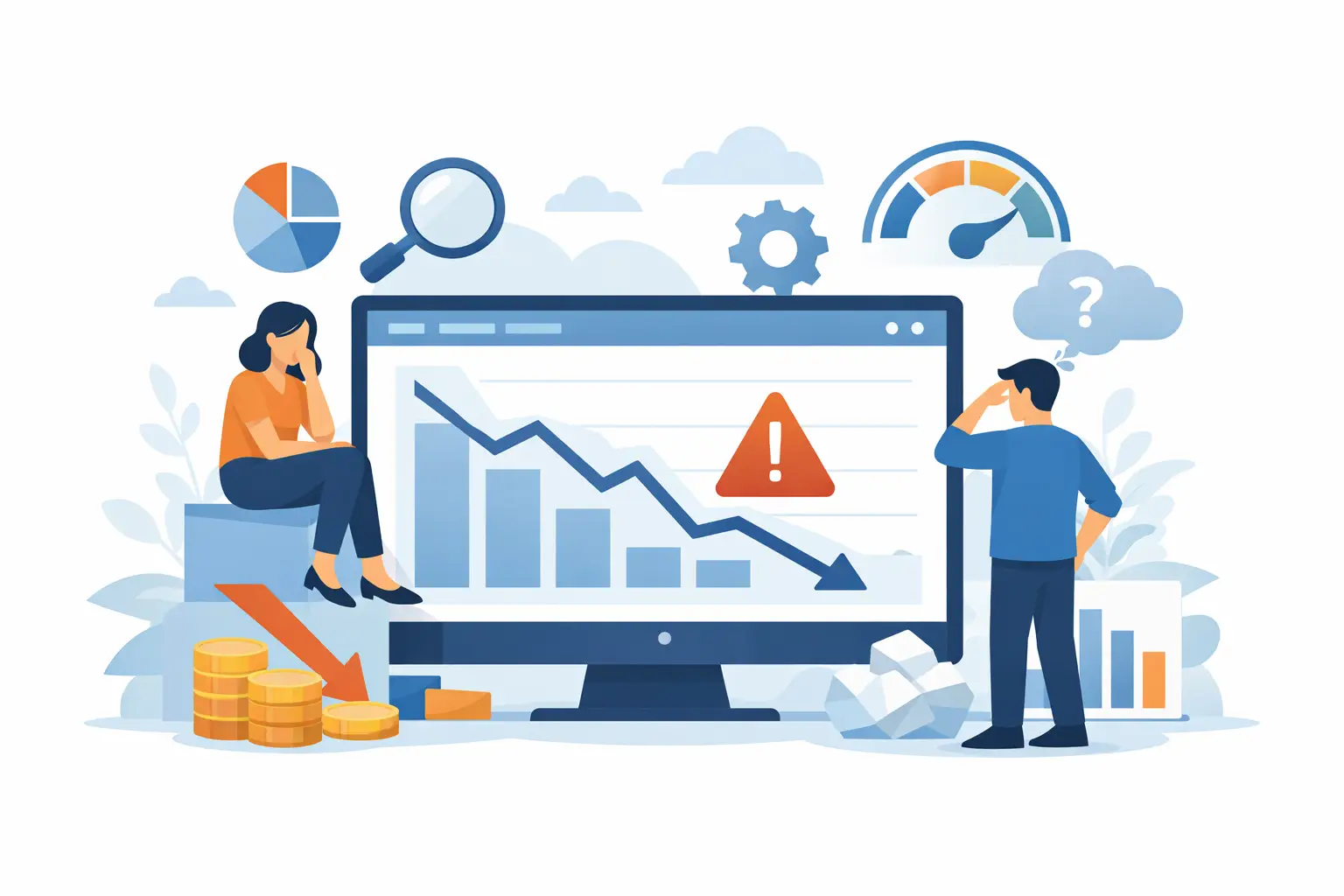
A website can look polished, reflect your brand colors, and still fail to create meaningful business results. If you are asking, “why is my website underperforming,” the answer is rarely one broken button or a single SEO setting. More often, the site is disconnected from the way your ideal customers search, evaluate options, and decide whom to trust.
For a small or mid-sized business, that gap can feel frustrating. You may be investing in social media, paid ads, referrals, or content, only to send potential customers to a website that does not clearly move them forward. The good news is that underperformance can be diagnosed. With the right priorities, your website can become a stronger part of a measurable growth system.
Why Is My Website Underperforming?
Before changing the design or spending more on traffic, define what “underperforming” means for your business. A site that generates few form submissions may have a conversion problem. A site with very little organic traffic may have a visibility problem. A site that attracts visitors but receives low-quality inquiries may have a positioning problem.
Start with the business outcome you need the website to support. That could be booked consultations, qualified quote requests, online sales, phone calls, applications, or sign-ups for an event. Then review the path from the first visit to that action. This keeps the conversation focused on evidence rather than assumptions.
1. Your message is unclear
Visitors should understand three things within seconds: what you do, who you help, and why they should choose you. When homepages lead with broad statements such as “quality service” or “solutions you can trust,” people are left to do the work of interpreting the offer.
Clear messaging does not mean oversimplifying your expertise. It means translating that expertise into customer language. A B2B consultant, for example, may know their work includes operational strategy, implementation, and leadership alignment. Their website still needs to explain the practical result: helping growing companies reduce costly process gaps and make better decisions.
A strong message also creates continuity. Your ads, social posts, sales conversations, and website should all reinforce the same value proposition. If each channel tells a different story, prospects may remember your name but not understand why they should contact you.
2. The site does not match search intent
Search intent is the reason someone enters a phrase into a search engine. A person searching “commercial roofing repair near me” wants a provider and a clear way to request service. Someone searching “how to choose commercial roofing materials” is still researching. Both visitors matter, but they need different pages and different next steps.
Many websites underperform because they try to serve every audience with one general service page. That makes it difficult to rank for specific needs and difficult for visitors to see that you are the right fit. Build focused pages around your core services, industries, locations where appropriate, and the questions buyers ask before making contact.
More pages are not automatically better. Each page needs a distinct purpose, useful information, and a place in your larger marketing plan. Thin, repetitive pages can weaken trust and create maintenance work without producing better results.
3. Your calls to action ask too much or too little
A visitor should never have to guess what to do next. Yet many websites bury the contact option, use vague buttons like “Learn More,” or send every visitor to the same generic form. At the other extreme, some businesses push for a purchase or lengthy commitment before the prospect has enough confidence to take that step.
Match the call to action to the buyer’s stage. A high-consideration service may benefit from options such as requesting a consultation, reviewing a case study, downloading a checklist, or calling to discuss a project. An urgent local service may need a prominent phone number and a fast estimate request.
The wording matters, but the surrounding context matters more. Tell visitors what will happen after they submit the form, how quickly you respond, and what information they should prepare. Reducing uncertainty often improves conversion more than changing a button color.
4. Mobile users have a harder experience
For many businesses, mobile traffic represents a significant share of total visits. If navigation is difficult, text is cramped, forms are tedious, or key details are hidden on a phone, prospects may leave before they ever see your credibility or service options.
Test the site as a customer would. Use a phone, not only a desktop preview. Can you find the primary service in a few taps? Is the phone number easy to use? Can a person complete the contact form without pinching, scrolling excessively, or typing unnecessary details?
Mobile performance also includes speed. Large image files, excessive scripts, auto-playing media, and poorly managed plugins can slow down a page. Visual impact is valuable, especially for a brand-led business, but every design choice should earn its place by supporting the visitor experience.
8 Website Performance Problems Worth Checking
A practical audit should look beyond aesthetics. Review these areas together, because a weak result is often caused by several smaller barriers rather than one dramatic failure.
- Slow page load times: Visitors and search engines both respond poorly to pages that take too long to load. Optimize image sizes, review third-party tools, and address technical issues that add unnecessary weight.
- Confusing navigation: Organize menus around the services and information customers seek most often. Keep top-level choices focused rather than making every page equally prominent.
- Weak proof: Testimonials, client outcomes, certifications, project examples, media features, and clear team credentials help turn claims into credibility.
- Outdated information: Old staff listings, expired promotions, broken forms, inaccurate hours, and stale service descriptions signal that the business may not be responsive.
- Missing local signals: Businesses serving defined areas need consistent location information, service-area language, and content that demonstrates genuine local relevance.
- Generic service pages: Describe the problem, your process, the expected outcome, and who the service is designed for. Specificity helps qualified prospects self-select.
- Poor lead handling: A website cannot compensate for slow follow-up. Track where inquiries come from and establish a clear response process for your team.
- No meaningful measurement: Page views alone do not show whether marketing is working. Track conversions, call activity, engagement with key pages, and the quality of leads that become opportunities.
5. Your brand does not build confidence
A visitor is evaluating more than your offer. They are assessing whether your business feels credible, consistent, and easy to work with. Inconsistent fonts, mismatched imagery, generic copy, and unclear pricing expectations can create hesitation even when the technical website experience is sound.
Brand trust is especially important for service businesses, where customers are buying expertise and a working relationship. Your website should show how you think, what your process looks like, and what clients can expect. This is where thoughtful photography, relevant project examples, clear positioning, and a confident voice work together.
Avoid copying a competitor simply because their site appears modern. The best approach depends on your sales cycle, your audience, and the level of education required before a buyer is ready to engage. A complex B2B service needs more depth than a straightforward appointment-based offering.
6. Traffic is being treated as the only goal
More traffic can help, but it is not the same as more business. A thousand unqualified visitors will not solve a weak offer, unclear targeting, or a difficult conversion path. In some cases, improving the conversion rate of existing traffic delivers a better return than increasing ad spend.
Look at traffic sources separately. Organic search, paid campaigns, referral visits, social media, email, and direct traffic often behave differently. If paid traffic is not converting but referrals are, the issue may be audience targeting or landing-page relevance. If organic traffic is low across the board, you may need stronger service content, technical SEO improvements, and a more consistent content strategy.
How to Prioritize Website Fixes
Do not begin with a full redesign unless the evidence supports it. A redesign can be the right investment when the site is outdated, difficult to manage, misaligned with the brand, or structurally unable to support growth. But many performance issues can be improved through focused messaging, page optimization, better calls to action, and stronger measurement.
Start by identifying the one conversion that matters most. Review the pages that lead to it, the traffic sources that feed it, and the points where visitors leave. Then address high-impact barriers first: unclear positioning, broken or hidden contact paths, slow mobile pages, and lack of trust-building proof.
From there, build a phased plan. Establish the strategy, refine the core pages, improve the technical foundation, create content that supports buyer questions, and measure results consistently. This approach prevents random changes and helps you understand which investments are creating progress.
Your website should not be a digital brochure that sits apart from the rest of your marketing. It should be an active extension of your business strategy, giving the right people a clear reason to trust you and an easy path to take the next step. When the diagnosis is grounded in your goals, you can replace guesswork with a plan that helps your business move forward.